Thanks for checking out this month’s edition of our Lens newsletter. See the highlights here and scroll on for all the details!
- 🗞️ What's New: Quick highlights from our annual retreat in Nashville
- 📖 Lens Library: New forest carbon datasets from Chloris and Planet
- 🎥 Events: Catch the recording of our joint webinar with Chloris
- 💚 Semi-Annual Survey: We'd love your feedback on Lens!
- 💸 Special Offer: Discover an end of year Lens saving opportunity ⬇️
What's New
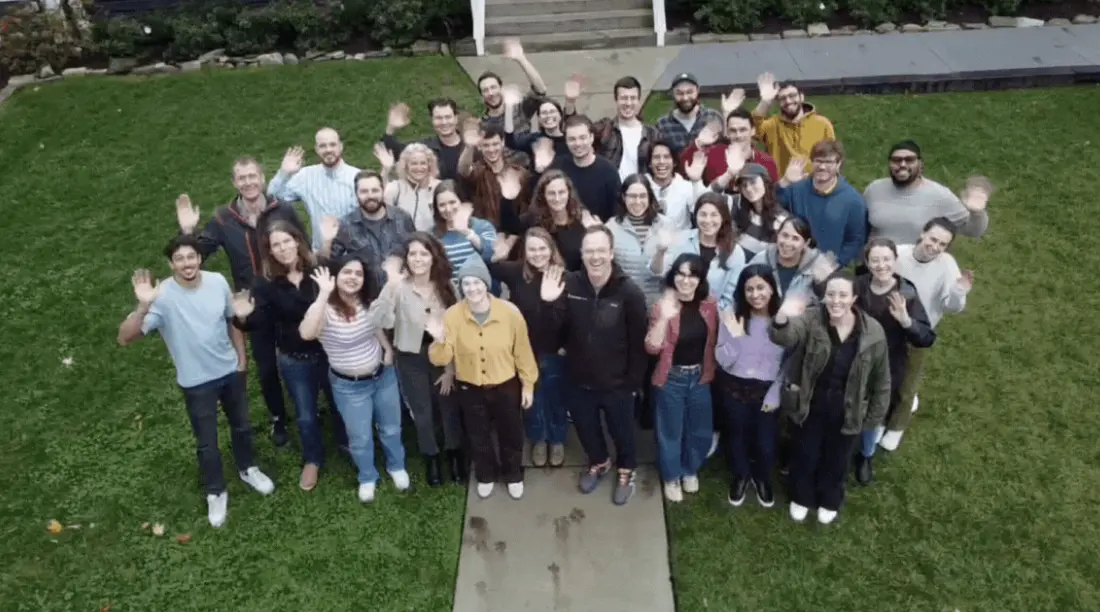
Howdy! Last week the Upstream Tech team gathered in Nashville for our annual retreat. As a fully remote team, this precious in-person time together is when we reconnect and (literally) put our heads together for some deep planning for the next year. Exciting things to come in 2025!
Chloris 30m Forest Carbon Data
We’re thrilled to share that we now have Chloris's 30-meter Forest Carbon data available in Lens. This bundle provides annual data on above-ground biomass stock and forest cover, with coverage back to 2000. Get started with this data by adding it to your portfolios from the Library, then order for individual properties at $0.04 per acre. Your first order includes the most recently available year, plus the entire historical archive as an added bonus.
[

](https://support.upstream.tech/article/170-chloris-forest-carbon)
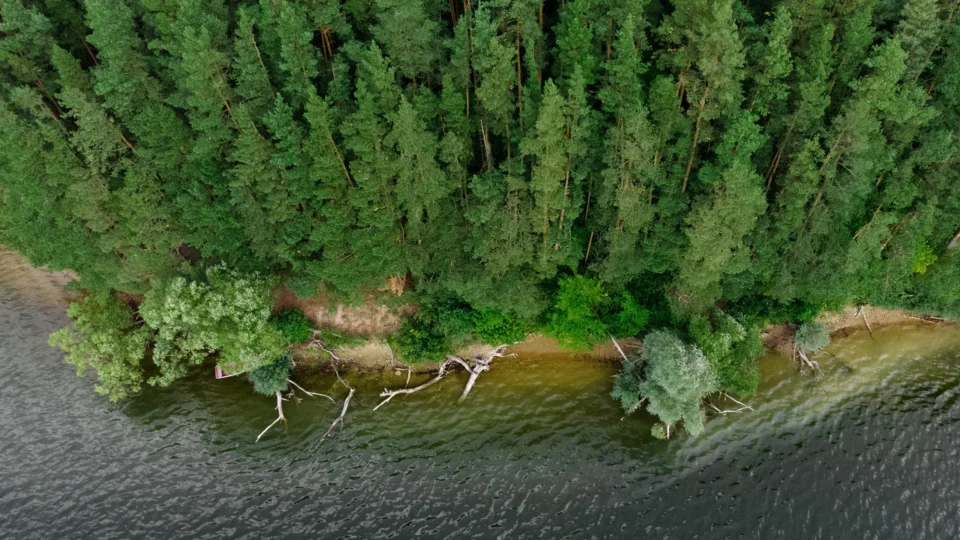
Left to right: Forest Cover, Carbon Stock, and Carbon Stock Change at 30m.
Planet 3m Forest Carbon Monitoring Data
We're excited to share that Planet's 3-meter Forest Carbon Monitoring dataset is available in Lens! This package offers 3m data on canopy height, canopy cover, and aboveground carbon stock and can be ordered for individual properties at $0.10 per acre. Your first order includes the most recently available quarter, plus the entire historical archive as an added bonus.
[

](https://support.upstream.tech/article/157-planet-forest-carbon-diligence)
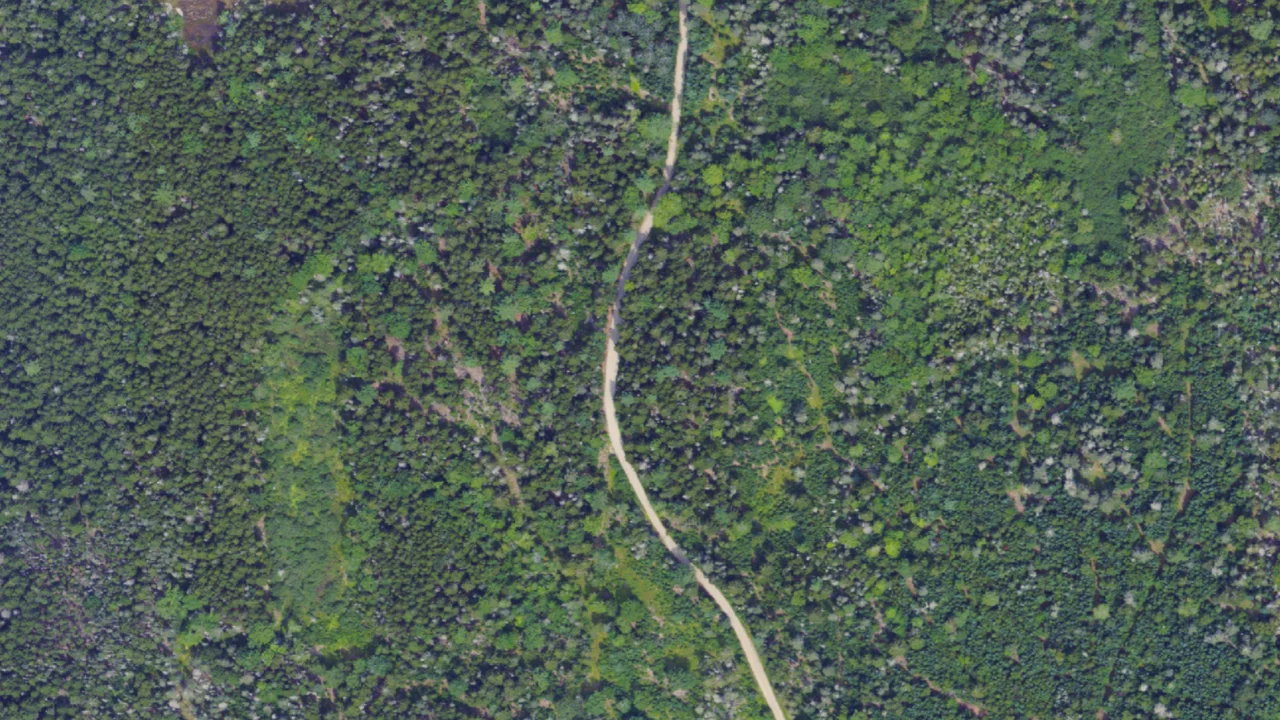
Left to right: Canopy Height, Aboveground Carbon, and Canopy Cover at 3m.
Meta Canopy Height Data
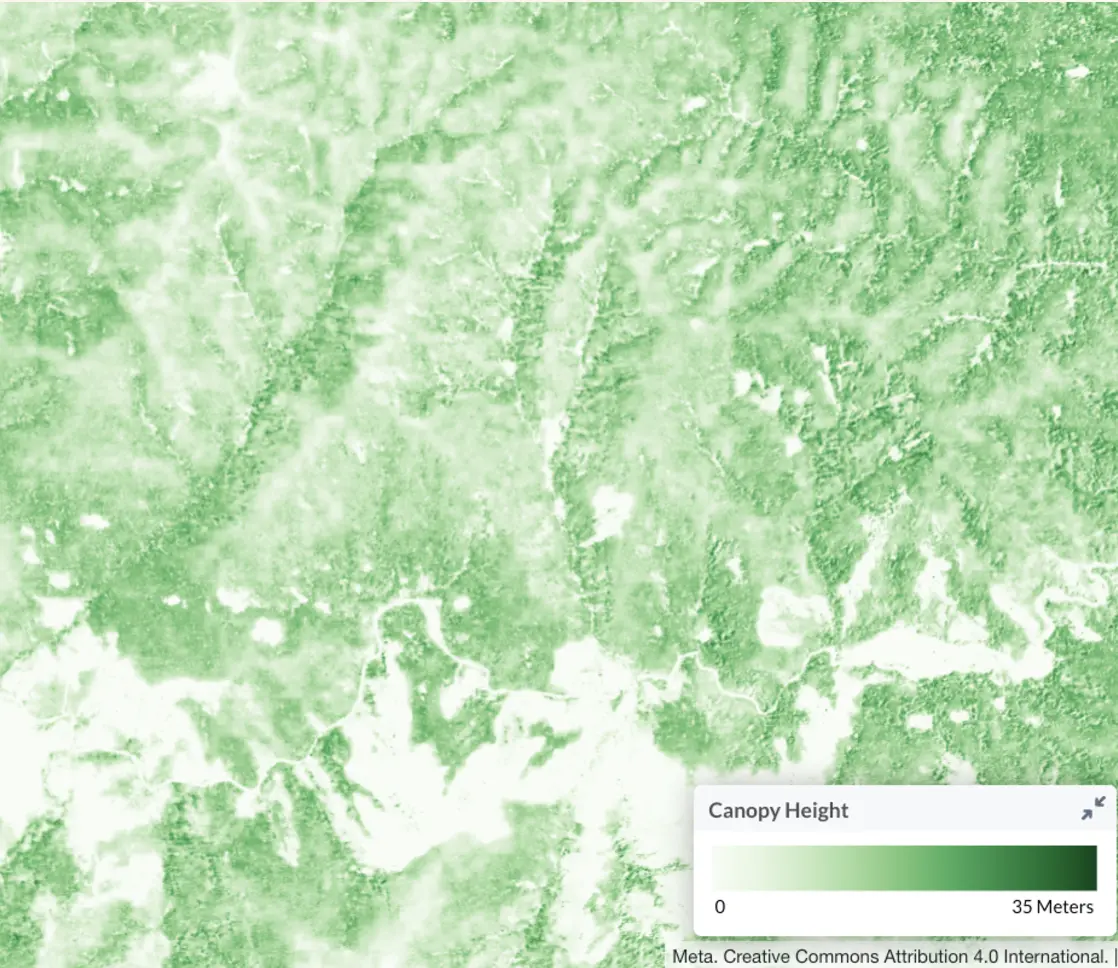
The Global Canopy Height dataset provides 1-meter resolution maps of canopy height, developed using self-supervised learning models trained on aerial imagery and GEDI Lidar. This dataset was created using sub-meter satellite imagery from Maxar between 2009 through 2020, making it a helpful supplement to baselines. This high-resolution data was developed to drive transparency and accountability in carbon markets and conservation efforts.
[
](https://support.upstream.tech/article/141-modeled-datasets)
Education
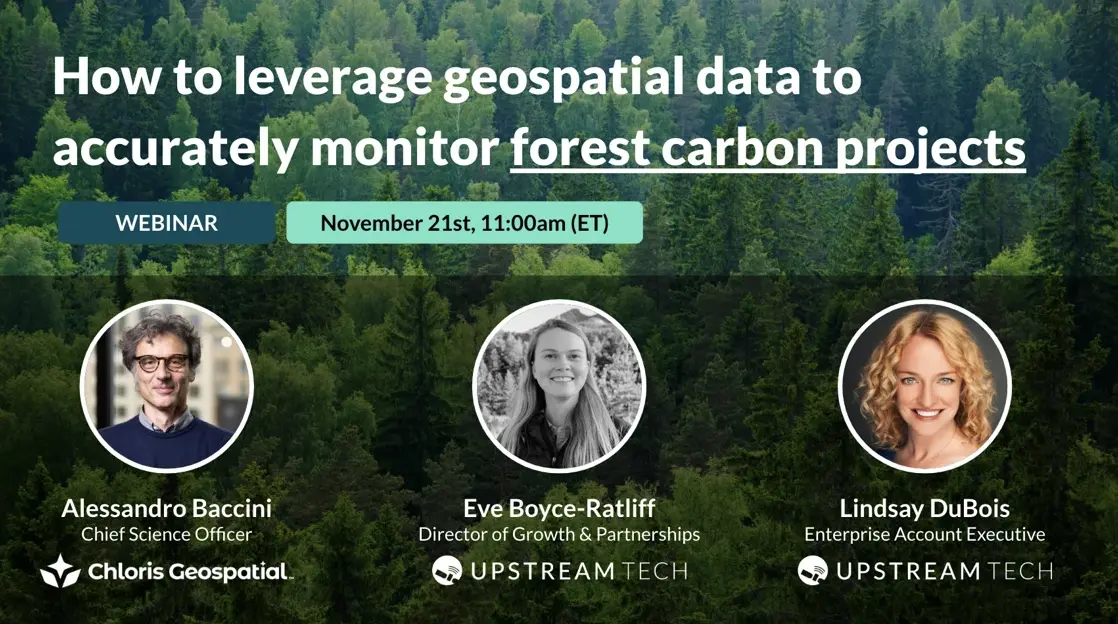
Recent Webinar: How to leverage geospatial data to accurately monitor forest carbon projects.
Curious about how to use the Chloris data? We recently hosted a webinar on how to leverage geospatial data to more effectively and accurately monitor forest carbon projects. If you missed the session, you can view the recording!
[
](https://www.upstream.tech/webinars/how-to-leverage-geospatial-data-to-accurately-monitor-forest-carbon-projects)
Special Offer
End-of-Year Savings for Upgrading to a Standard Plan ⏱️💸
Has your organization considered upgrading from a Lite to a Standard plan with Lens? Take advantage of up to $1,580 in total savings when you upgrade by the end of 2024.
The Details:
- Send us an email mentioning the November newsletter l to start the process of upgrading to a Standard annual plan
- Receive $500 in account credit
- When used with our non-profit discount, this brings the annual cost for the Standard plan from $7,200 to $5,620
- Read more about the additional features included with a Standard plan, including parcel data, automated change detections with Lens Lookout, additional user seats, streaming links for GIS, and more
We're hiring!
Like what you're reading and want to be more involved? Know someone else who might be? We're hiring for several positions and also have an Open Call for applications if you have something in mind.
Where on Earth?
👋 Hello from Nashville! Last week the Upstream Tech team gathered for our annual retreat. We spent time reflecting on the past year, planning for 2025, and having fun together. Some of us may have even gone line dancing!
Hot Tip

Have you tried the range filter tool? Use this with any index layer from the Lens Library to help you quickly isolate and visualize specific data ranges on a property. If you're working in Compare Mode and are comparing two datasets of the same source, the range filter will apply to both images!
[
](https://support.upstream.tech/article/166-range-filter)
Check out the rest of our support center to learn more about working in Lens, and know that you can always reach us at lens@upstream.tech with any questions.
- Alison & the Lens Team