Understanding a forest used to mean walking in the woods — measuring trunks, counting crowns, and estimating height. Canopy height in particular has always been one of the most challenging measurements, whether collected on the ground or sensed from above, yet it's important for understanding forest health, biomass, and carbon storage.
Thanks to advances in remote sensing and deep learning, accurate insight into canopy height is no longer out of reach. We've partnered with CTrees — a nonprofit at the forefront of forest science — to bring their 60 cm Tree Canopy Height dataset directly into Lens, giving our users an unprecedented window into forest structure across the United States.
Read more about the partnership.

The data: Tree canopy height at 60 cm resolution
The CTrees Tree Canopy Height dataset is the highest spatial resolution canopy data we've made available in Lens. The dataset combines aerial imagery from the USDA with LiDAR reference data, producing a wall-to-wall map of tree height across the U.S. at 60 cm resolution — fine enough to distinguish individual trees and reveal the vertical structure of a forest in meaningful detail. The CTrees model reliably identifies trees from 1-meter to 60-meters tall.
Why does resolution matter so much? Coarser datasets can capture a forest in broad strokes, but at 60 cm, you can see how that forest is structured in much greater detail: which stands are mature and tall, where regeneration is happening at ground level, and which areas may be stressed, thinning, or recovering. Canopy height is also one of the most reliable proxies for aboveground biomass and carbon storage, making this data directly relevant for carbon accounting and reporting.
Learn more about their methodology.
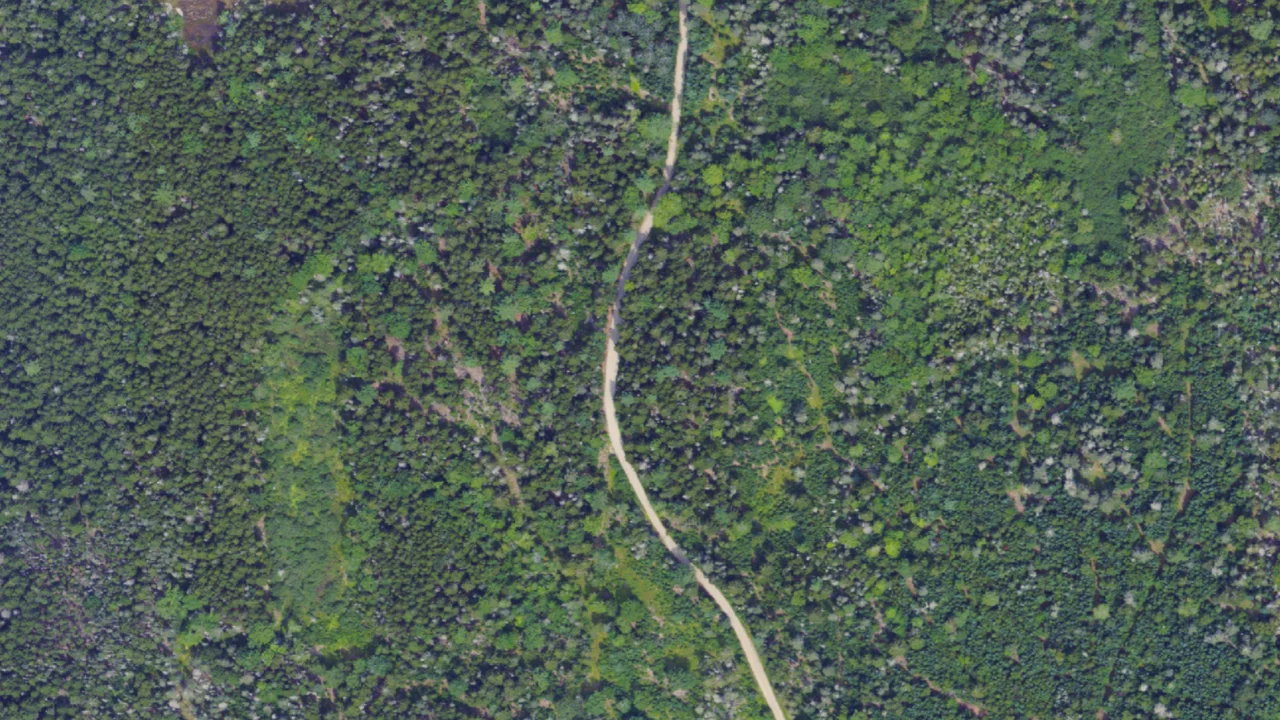
In Lens, users can view this canopy height data alongside high-resolution true color imagery, NDVI, and other analytics — all in one place, without any GIS expertise required.

Using CTrees data in your monitoring work
Forest structure data at this resolution unlocks a range of applications for the organizations using Lens to manage and monitor landscapes:
Tree planting and restoration projects. Whether you're replanting after a fire or executing a long-term reforestation strategy, canopy height data lets you track whether your efforts are taking hold — and compare new growth against established forest benchmarks over time.
Forest conservation and carbon programs. For land trusts, conservation organizations, and carbon project developers, understanding forest structure is foundational. This data supports baseline assessments, helps identify high-value stands, and enables monitoring for reversals or degradation that could affect carbon credit integrity.
Pre- and post-disaster monitoring. Wildfires, ice storms, and hurricanes can dramatically reshape a forest's canopy. With high-resolution height data, you can quantify the before-and-after impact of a natural disaster, support recovery planning, and document change for insurance or grant reporting.
Utility vegetation management. Understanding tree height in and around rights-of-way helps utilities identify encroachment risks and prioritize inspection and trimming work.
Get started in Lens
The CTrees Tree Canopy Height dataset is available now in the Lens Library. Log in and explore it on any U.S. property, or book a demo to see it in action alongside our full suite of imagery and analytics.