For more than a century, The Westervelt Company (Westervelt) has stewarded land across the American landscape, managing natural resources with values of ecological restoration and conservation. Within that legacy sits Westervelt Ecological Services (WES), a team devoted to restoring wetlands and streams, protecting endangered species, and managing mitigation banks across its Southeast, Rocky Mountain and Western Regions.
With thousands of acres under stewardship, monitoring is a tall task. The WES team is tracking a wide range of environmental indicators, including changes in vegetation, restoration progress, regulatory compliance, and carbon stored in forests and wetlands. Timely, accurate data is essential for both day-to-day management and long-term reporting, and they've tapped Lens to support their work. With quick access to recent imagery, fine-scale carbon insights, and intuitive dashboards, Lens helps them to keep track of changes on the ground, report on impact, and deliver on their stewardship commitments.

We sat down with Kristen Selikoff, Senior GIS Analyst for the Southeast region, and Sam Blumenfeld, who leads Westervelt's corporate carbon accounting, to learn more about their monitoring, reporting, and decision-making process.
From planes to satellites: Lens takes Westervelt's monitoring to new heights
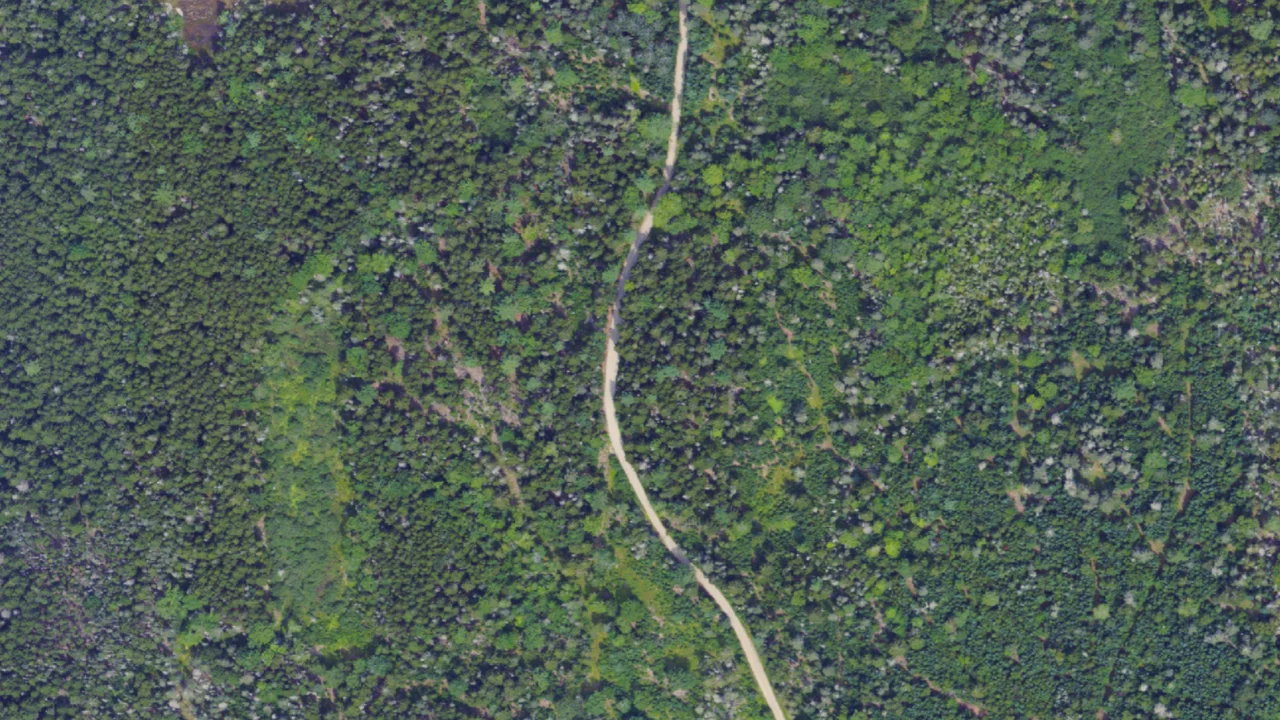
Before Lens, WES relied on annual aerial flights to acquire updated imagery, often waiting weeks or months for the flights to be contracted and the data to be delivered. Not only was the process slow, but it also produced limited, inflexible snapshots that couldn't support the real-time needs of their work. For their projects requiring active stream restoration, that lag was especially challenging. Their team needed a way to track progress and ecological change continuously; otherwise, staff had to be on the ground far more often just to understand what was happening on-site. Lens "has exponentially decreased the time that it takes to get the most recent imagery for [their] projects," says Kristen, replacing the bottleneck with on-demand access to recent imagery.
"Lens has exponentially decreased the time that it takes to get the most recent imagery for our projects."
Lens provides a modern toolkit for WES' monitoring needs
On-demand imagery for any project or site evaluation
Most WES sites are monitored on an annual cycle, with additional check-ins when stewardship teams identify changes on the ground. But when a project requires a different monitoring cadence, Lens gives the team the flexibility to adjust on the fly. On one site undergoing timber management, for instance, the stewardship team needed to track progress over longer, defined phases. Using Lens, Kristen was able to order specific imagery aligned with the project's timeline—something that would've been impossible under their old workflow of tasking planes and waiting for flights and processing. As she put it, "Our biologists can tell me what date range they are looking for, and I can access the imagery we need that same day."

Beyond active project monitoring, Lens plays an important role in evaluating potential new mitigation sites. The WES team uses Lens to review the most recent environmental conditions—often the very first step in determining whether a site is worth pursuing. With fresh, reliable imagery at their fingertips, they can quickly assess suitability, spot potential constraints, and decide if a property warrants a closer look. This early visibility helps WES make confident, data-informed decisions before investing time and resources in on-the-ground reconnaissance.
Reporting on large-scale impact: Carbon insights from the Lens dashboard
In addition to supporting day-to-day monitoring, Lens has become a cornerstone of Westervelt's large-scale sustainability reporting. As the company expanded its internal carbon accounting, WES needed a way to integrate carbon insights across all their mitigation banks without adding significant staff time or building new analytical tools from scratch. The carbon data available in Lens fit seamlessly into their existing methodology, allowing the team to calculate both standing carbon and annual carbon flux for each of their three major regions. With consistent, portfolio-wide metrics at their fingertips, WES can now incorporate carbon performance directly into corporate reporting and strategic decision-making.


Westervelt was an early adopter of the portfolio-wide dashboard in Lens, using it to bring together carbon and land-change monitoring in one place. For Sam Blumenfeld, who leads Westervelt's corporate carbon accounting and sustainability analysis, the dashboard dramatically simplified what used to be a time-consuming, multi-step process. His workflow is now as simple as:
- Open Lens
- Select a regional portfolio (e.g., the Southeast)
- Export the carbon values as a CSV
- Convert to Excel and sum the totals
- Repeat for each region to compute standing carbon and annual flux
"It's super simple," Sam shared. "I go in, download the CSV, convert it, and sum it—that's all I have to do."
Given Westervelt's complex, multi-state footprint, this ease of access is critical. Lens allows the team to move from fine-scale project-level insights to aggregated corporate reporting in minutes—creating a unified view of carbon performance across the entire portfolio.
Carbon insights from Lens in action
For Westervelt the results are more than metrics: they directly inform meaningful business strategy. As a large land owner, Westervelt is proud to be a carbon-positive company, sequestering and storing significantly more carbon than it emits. Communicating this, whether in external communications or while advocating their industry's sustainability story to lawmakers, requires high-quality data. The carbon insights from Lens give Sam the validation he needs to include the measured carbon from WES property in his holistic reports. The values are some of the largest in Westervelt's entire portfolio, and he shared just how much he trusts the data quality from Lens.
"Westervelt is in the strong minority of companies that can claim they are carbon positive, and the carbon measured by Lens provides data to make that claim. In the range of tools and methodologies used in the carbon accounting sector, the Lens data quality is some of the most accurate available."

Collaboration that scales impact
This level of impact grew out of close, ongoing collaboration between WES and the Lens team. When Kristen shared how time-consuming it was to analyze carbon values for every individual property, the Lens team was able to point her to the then-new portfolio dashboard as a solution. From there, collaboration became essential. Our Customer Success Team worked closely with WES to fine-tune their dashboards, determining exactly which areas should roll up into which portfolios, how carbon metrics should be surfaced, and how to structure the dashboard so it aligned cleanly with their internal reporting needs.
When we asked Kristen what advice she would give to others getting started with remote monitoring, she emphasized the value of open communication of your challenges and monitoring needs.
"My best advice is to communicate with your Lens team. Every time we've raised a need, they've been on it — collaborating with us to build the right tools and make it work."
Rather than a standalone feature, the dashboard has become a reliable, integrated part of WES's workflow — one that can continue to be customized and adapted to their needs. Together, Lens and WES have combined powerful tools with a commitment to ecological restoration and carbon goals to create widespread impact.
Get in touch to see how Lens can support your team's workflow — or schedule a demo to experience the Lens dashboard first-hand.